
🗞️ The Gutter Report: The Good, The Bad, and The Ugly — Three Eras of Power Inside the Brooklyn DA’s Office
From reform to resistance to raw prosecutorial abuse
🧭 Introduction: Why the Brooklyn DA Still Shapes Lives
Brooklyn, New York — For over thirty years, the Brooklyn District Attorney’s Office has quietly controlled the fate of tens of thousands of people — deciding who gets charged, who gets believed, and who gets forgotten.
Three men. Three eras. Three radically different philosophies of justice.
Charles Hynes. Kenneth Thompson. Eric Gonzalez.
Their legacies are not theoretical.
They live on in prison cells, court transcripts, sealed motions, and families still waiting for answers.
This is not about personalities.
This is about power — and how it has been used.
🟢 The Good: Kenneth Thompson (2014–2019)
A DA for the People. A Black Man Who Changed the Culture.
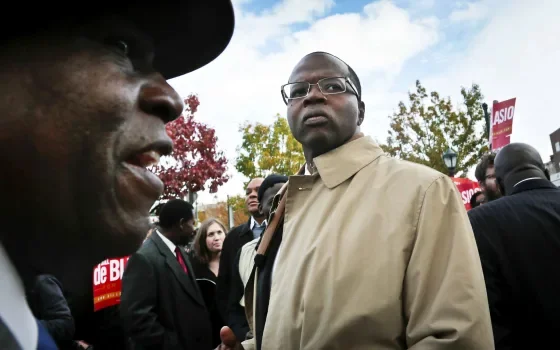
🟢 Kenneth Thompson engaging directly with the community he served.
When Kenneth Thompson took office in 2014, Brooklyn saw something it had never truly seen before:
A District Attorney who treated the office like a public trust — not a fortress.
Thompson was a civil rights attorney, a community lawyer, and a Black man who understood the lived reality of policing, prosecution, and mass incarceration from both sides of the system.
He didn’t come in trying to preserve the machine.
He came in trying to fix it.
What He Actually Changed
Thompson created Brooklyn’s first real Conviction Review Unit (CRU) with investigative authority — allowing wrongful conviction claims to be reopened, evidence to be retested, and police conduct to be scrutinized.
Before him, Brooklyn had no serious internal mechanism for correcting its own mistakes. Innocence claims were buried. Files were sealed. Prosecutors protected prosecutors.
Thompson broke that culture.
Under his leadership:
Old cases were reopened
Prosecutorial misconduct was acknowledged
Multiple wrongful convictions were overturned
The DA’s office accepted public accountability
For the first time, Brooklyn officially said the quiet part out loud:
The system gets it wrong — often.
A Black DA in a System That Ruins Black Men
This part matters.
Kenneth Thompson was not just a reformer.
He was a Black man leading one of the most powerful prosecutorial offices in America.
An office that for decades had disproportionately:
Targeted Black defendants
Criminalized Black neighborhoods
Relied on coerced Black witnesses
Ignored Black innocence claims
Instead of denying that history, Thompson confronted it.
He shifted the moral center of the institution — not symbolically, but structurally.
He made the DA’s office act less like a shield for the system
and more like a corrective force within it.
Bottom line: Kenneth Thompson didn’t just reform Brooklyn.
He redefined what a District Attorney could be — and who justice was supposed to serve.
A real DA for the people.
🟡 The Bad: Eric Gonzalez (2019–Present)
Reform Inherited. Courage Not Always Applied.
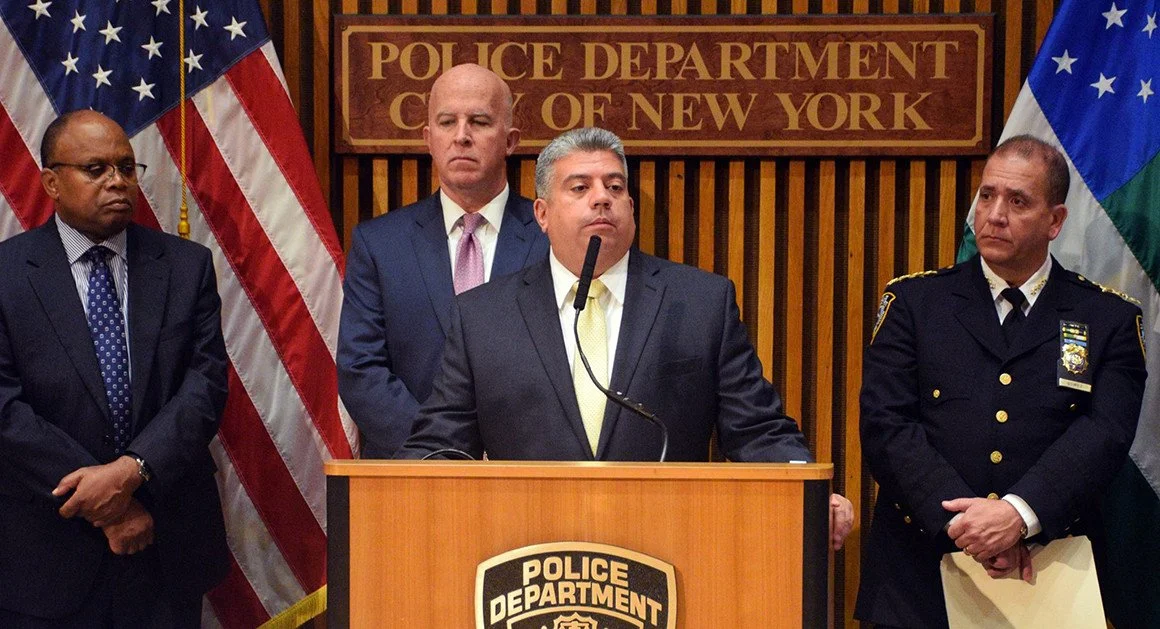
🟡 Eric Gonzalez flanked by NYPD leadership — reform language, traditional alliances.
Eric Gonzalez inherited Thompson’s framework — and the reputation of a “progressive prosecutor.”
But his tenure has been defined by caution.
What Defines the Gonzalez Era
Expanded the CRU in size and funding
Increased public messaging around reform
Selective engagement with innocence claims
Resistance to reopening politically sensitive cases
Reluctance to challenge institutional history
Gonzalez governs in the gray zone.
His office speaks the language of reform — but critics argue the substance often stops when cases implicate past prosecutors or systemic misconduct.
In other words:
Reform is allowed —
until it threatens the institution itself.
Bottom line: A DA who manages optics better than outcomes.
🔴 The Ugly: Charles Hynes (1989–2013)
The Architect of Brooklyn’s Conviction Machine
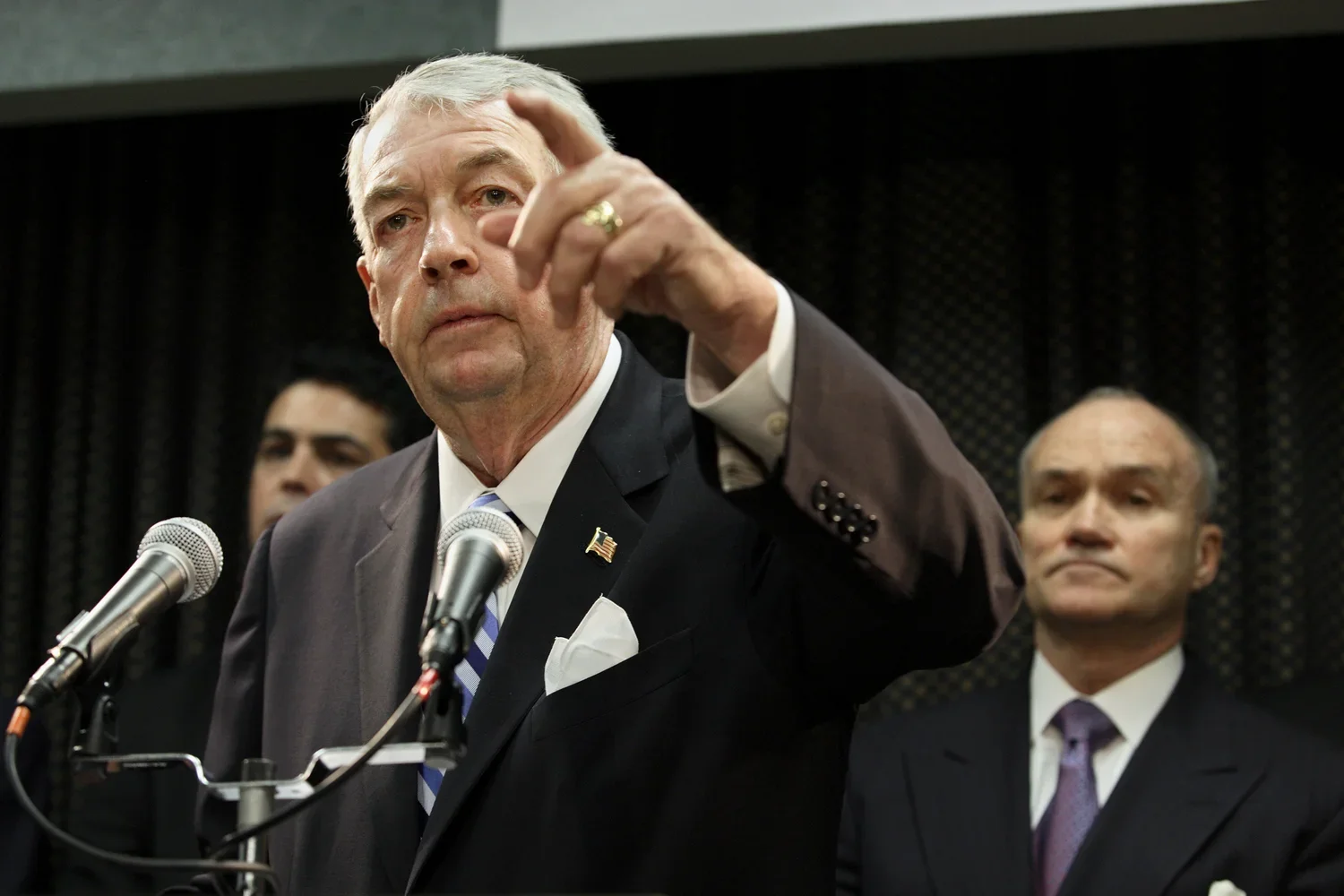
🔴 Charles Hynes addressing the press during the peak of his power.
For nearly 25 years, Charles Hynes ran the Brooklyn DA’s Office like a fortress.
Winning cases wasn’t the goal — it was the metric.
What Defined the Hynes Era
Coerced and manipulated witnesses
Secret overnight witness detentions (“Hotel Hynes”)
Systematic use of jailhouse informants
Pressure campaigns against reluctant witnesses
Multiple wrongful convictions later overturned
Public denials followed by sworn admissions
Under Hynes, Brooklyn became nationally known for something no office should ever be known for:
warehousing witnesses to secure convictions.
Men and women were held in hotels under guard.
Phones confiscated.
Lawyers restricted.
Statements shaped to fit prosecution narratives.
This wasn’t justice.
It was manufacturing outcomes.
Bottom line: A legacy defined by power, secrecy, and irreversible harm.
⚖️ The Real Legacy: Why This Still Matters
Brooklyn’s prosecutorial history isn’t over. It’s unresolved.
Many of today’s innocence claims trace directly back to:
Investigations approved under Hynes
Convictions inherited by Thompson
Reviews stalled under Gonzalez
These aren’t old stories.
They are open wounds in the system.
Every time the DA’s office refuses to reopen a case, it is making a choice:
To protect its history — or correct it.
🧠 Final Word
Three men.
One office.
Thousands of lives.
The difference between justice and injustice in Brooklyn has never been about the law.
It’s always been about who controls the narrative.
And for one brief, powerful era —
That narrative belonged to the people.
Not for clicks — for clarity.
— Elliott Carterr, LFTG Radio
📱 TikTok: @elliott_carterr ↗
📺 YouTube: @lftgradio ↗
🌐 Website: LFTGRadio.com ↗
⚖️ The Gutter Justice Project ↗
❤️ Support the work: LFTGRadio.com/donate ↗
