🛰️ The Gutter Report: From Battlefield to Brooklyn — Inside the Capture of Nicolás Maduro and What Comes Next
How the United States turns foreign conduct into federal court cases — and why this prosecution follows a playbook we’ve seen before
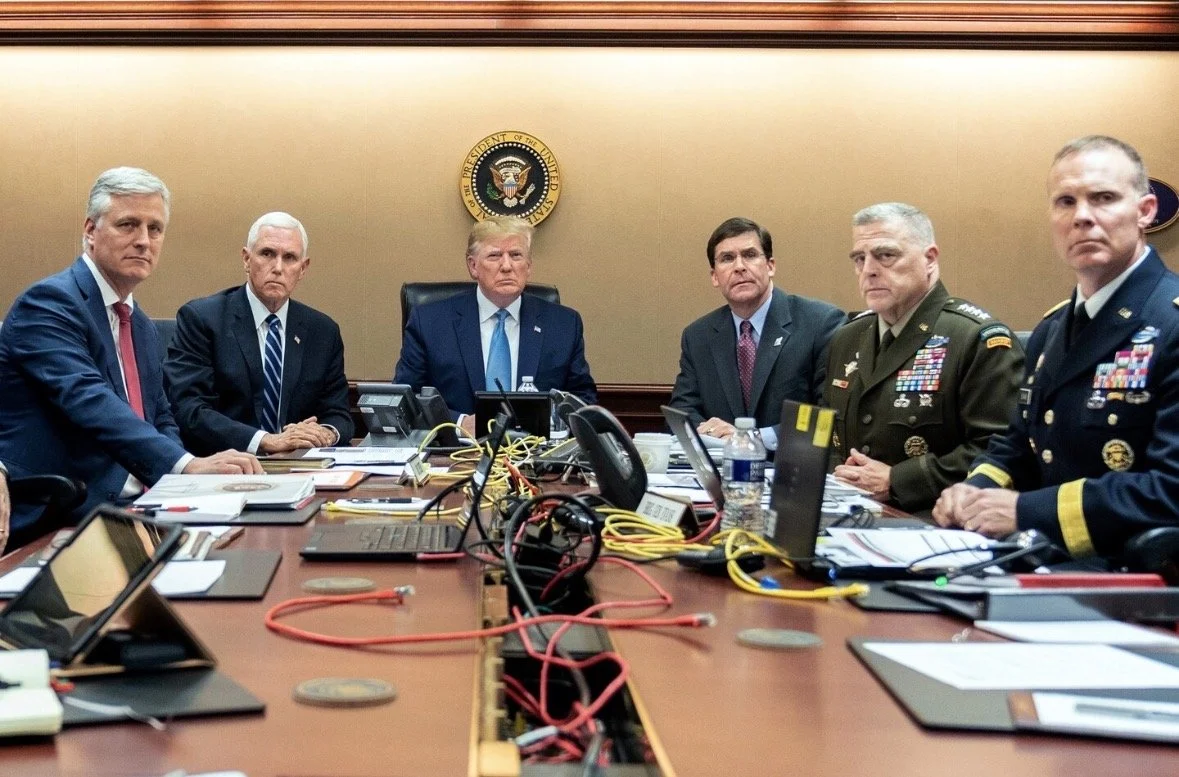
🧠 Senior U.S. leadership overseeing the operation as a national-security decision
🗺️ What’s being reported
New York, NY / Caracas, Venezuela — According to released imagery, official statements, and international reporting, Venezuelan leader Nicolás Maduro was taken into U.S. custody during a coordinated operation that moved rapidly from foreign soil into American jurisdiction. The operation was not framed as a traditional war or regime change, but as a national-security action designed to end in criminal prosecution inside the United States.
That framing is deliberate — and it matters.
The objective was not occupation or overthrow. The objective was custody, transport, and courtroom authority.
🇺🇸 National interest, not conventional war
This operation closely tracks how Donald Trump has publicly described his approach to transnational drug organizations and narco-states.
When asked in 2025 why he would not seek a formal declaration of war against drug cartels, Trump responded:
“I don’t think we’re going to necessarily ask for a declaration of war… we’re just going to kill people that are bringing drugs into our country.”
Stripped of politics, the doctrine is clear: cartels and narco-states are not treated as sovereign equals — they are treated as criminal enterprises. Neutralize first. Prosecute after. Let the courtroom deliver final legitimacy.
The Maduro operation appears to follow that doctrine precisely.
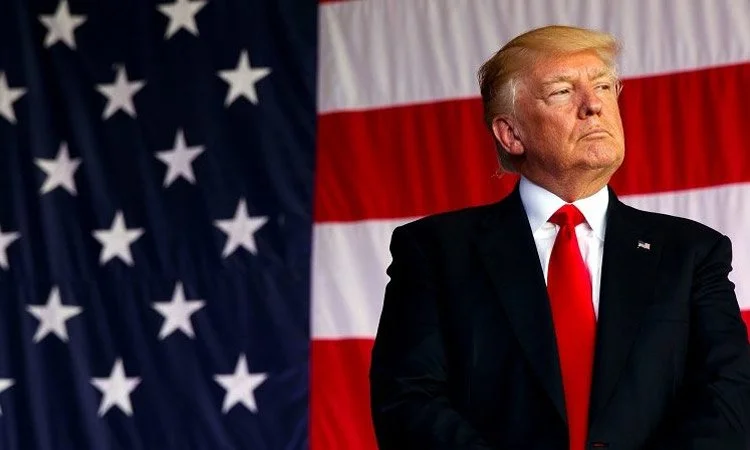
🇺🇸 Trump presenting the operation as an assertion of American national interest
👁️ Custody, not combat
The visuals surrounding the capture are intentional. Blindfolds. Controlled posture. Tactical gear paired with law-enforcement handling. These are not prisoner-of-war optics — they are arrest optics.
The United States is not presenting this as a battlefield victory. It is presenting it as a law-enforcement outcome, with military force used as the delivery mechanism.
That distinction sets the legal stage for everything that follows.
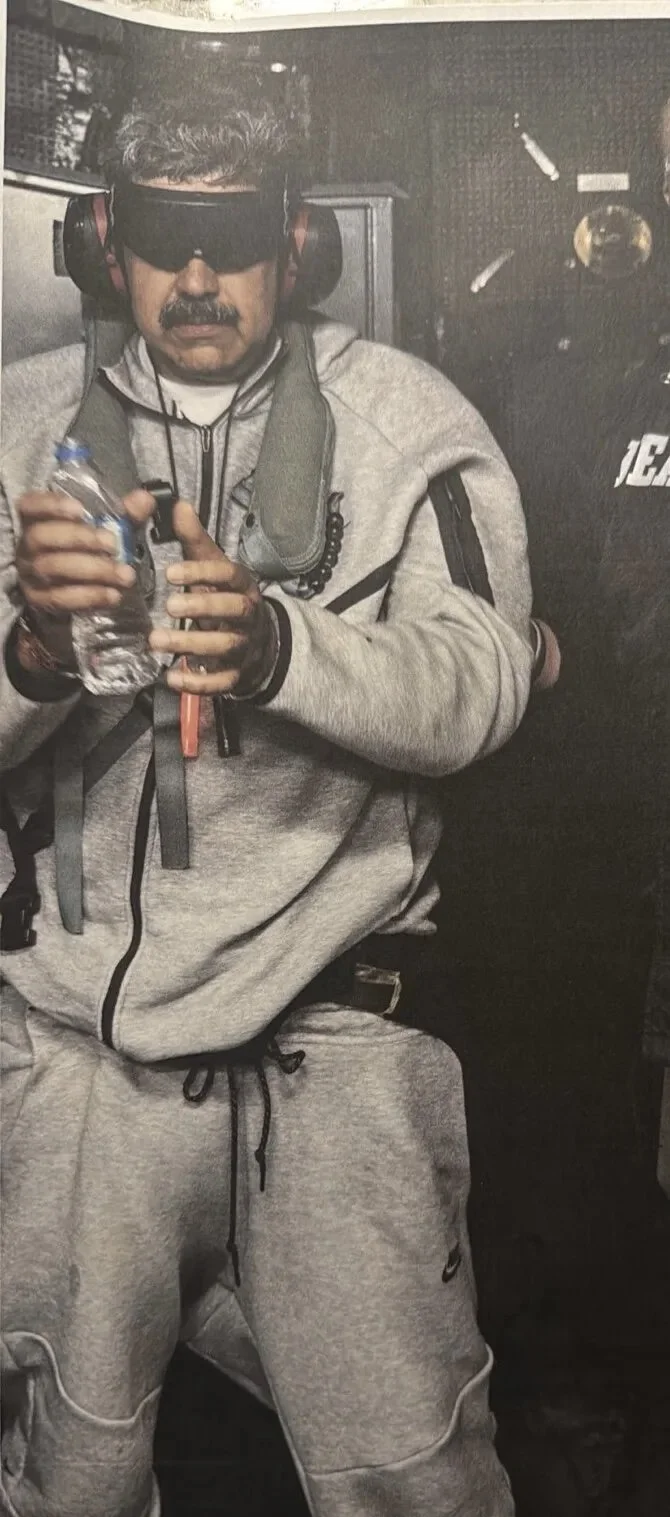
👁️ Maduro restrained and blindfolded, signaling arrest rather than military detention
🔒 From head of state to federal detainee
Post-capture images show Maduro seated, restrained, and flanked by U.S. law-enforcement personnel. The message is unmistakable: this is not exile or detention abroad — this is entry into the federal criminal system.
The shift from presidential authority to detainee posture signals intent. The United States is asserting jurisdiction, not just dominance.
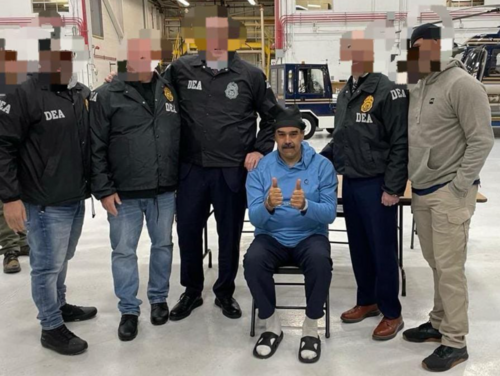
🔒 Maduro photographed in U.S. custody alongside federal agents
🏛️ Federal custody and what comes next
Multiple reports indicate Maduro is currently in federal pretrial custody in New York, with proceedings expected in the Southern District of New York (SDNY) — the same court used for the most aggressive international prosecutions brought by the U.S. government.
This is not standard detention.
High-profile international detainees are typically held under highly restrictive conditions:
Limited movement
Heavy security
Separation from general population
Supervised legal access
The objective is control, safety, and preservation of the case — not punishment before trial.
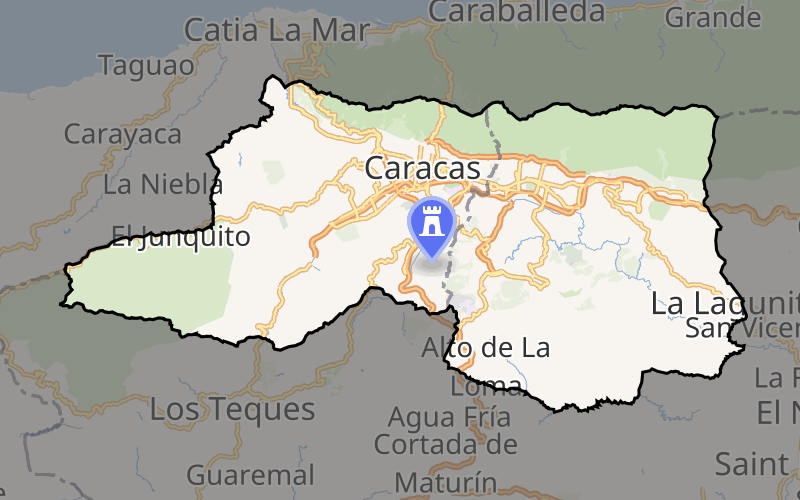
📍 Map showing Caracas, underscoring the operation originated on foreign soil
⚖️ The Chuckie Taylor precedent
This is not the first time the United States has prosecuted crimes committed entirely outside its borders.
The clearest precedent is Chuckie Taylor, the son of former Liberian president Charles Taylor. He was convicted in U.S. federal court for acts of torture committed in Liberia — not America.
The legal foundation in Taylor’s case was extraterritorial jurisdiction, explicitly authorized by Congress for torture offenses.
LFTG Radio did not just analyze that case — we covered it directly. I personally interviewed Chuckie Taylor about what it means to be prosecuted in the United States for conduct that never occurred on U.S. soil. That interview remains part of this platform’s public record.
Where the comparison holds — and where it stops:
Taylor’s case rested on universal jurisdiction
Maduro’s case rests on an asserted U.S. nexus to foreign conduct
Same reach. Different legal footing.
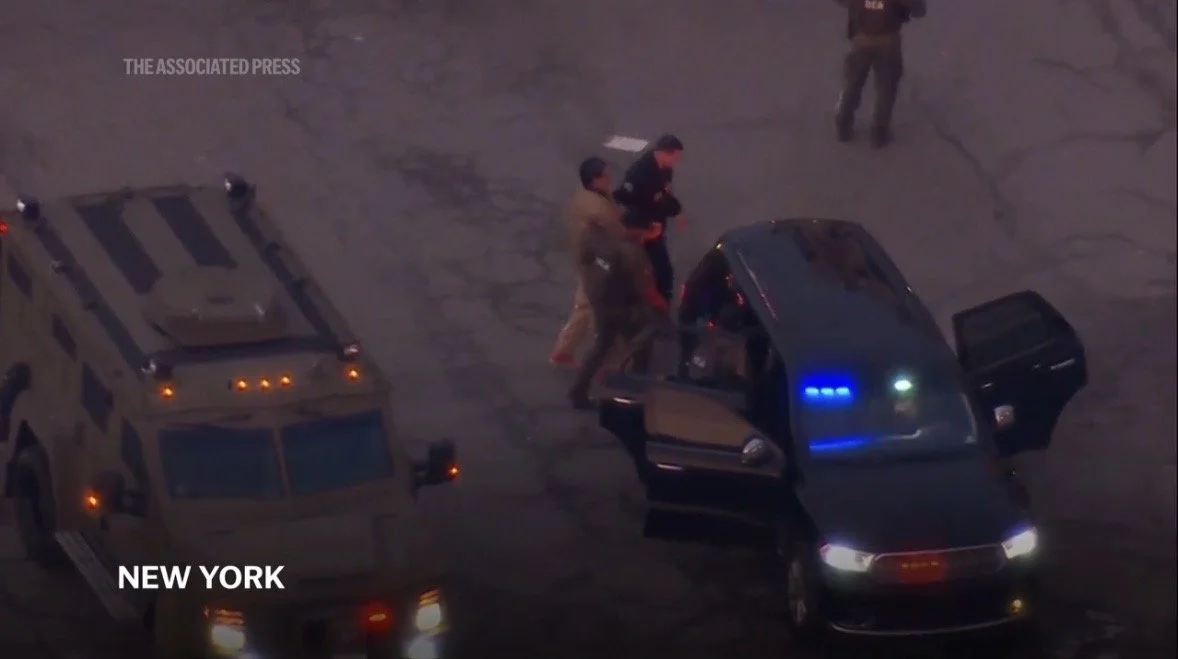
🚔 Armed agents escorting the detainee during transfer into U.S. control
📜 What this case will actually be about
In its early stages, this prosecution will focus less on narcotics — and more on law.
Expect immediate battles over:
Jurisdiction
Sovereign immunity
Manner of capture
Precedent-setting authority
The prosecution’s strategy is clear: survive jurisdictional challenges, secure legitimacy, and let conviction finalize what force initiated.
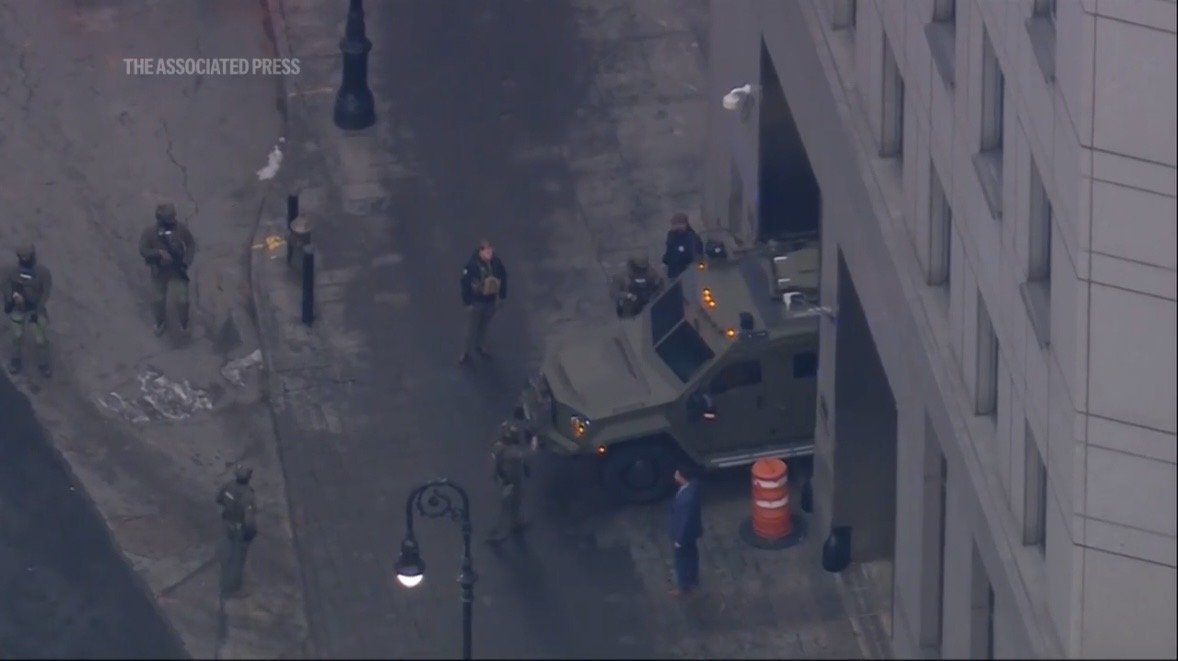
⚖️ Federal agents executing a controlled transfer into the justice system
🧭 The bigger picture
This case is not just about Nicolás Maduro.
It is about whether the United States can:
Project force abroad
Convert that force into custody
Transform custody into criminal jurisdiction
The U.S. has done this before. The difference now is who sits in the defendant’s chair — and how openly military power is being converted into courtroom authority.
If this case holds, it will not be remembered as a capture.
It will be remembered as a template.
Not for clicks — for clarity.
— Elliott Carterr, LFTG Radio
📱 TikTok: @elliott_carterr ↗
📺 YouTube: @lftgradio ↗
🌐 Website: LFTGRadio.com ↗
⚖️ The Gutter Justice Project ↗
❤️ Support the work: LFTGRadio.com/donate ↗
