📂 The Gutter Report: Inside Larry Hoover’s Fight for Clemency
From Chicago street legend to federal supermax prisoner, the founder of the Gangster Disciples is once again at the center of a national debate over prison, redemption, politics, and power
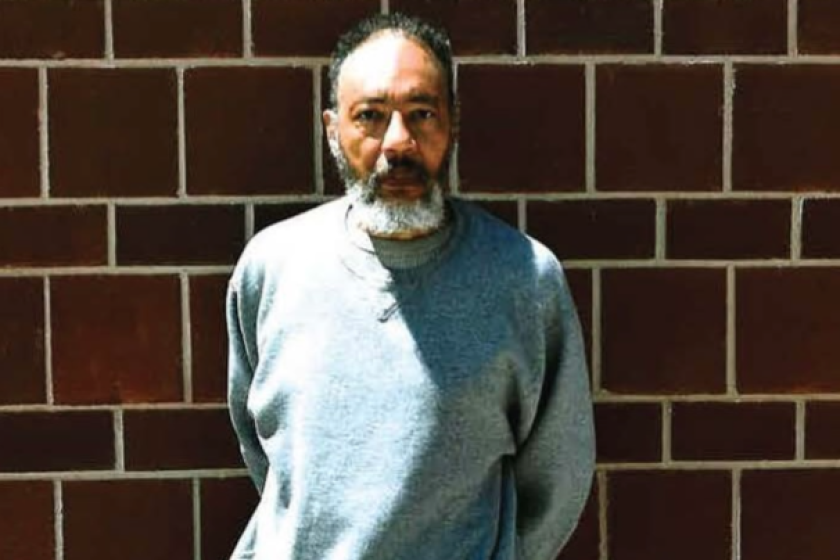
🪶 Larry Hoover during his years inside federal custody
🧩 Who Is Larry Hoover?
Chicago, Illinois — Larry Hoover is one of the most notorious gang figures in modern American history.
Born in Jackson, Mississippi before relocating to Chicago as a child, Hoover rose from the streets of Chicago’s South Side to become the alleged architect of the Gangster Disciples — a street organization that eventually spread far beyond Illinois into cities across the United States.
To some people, Hoover became a symbol of street influence, organization, and power.
To others, he became the face of generational destruction tied to gang violence, narcotics trafficking, extortion, and organized crime throughout Chicago neighborhoods.
Federal authorities once described the Gangster Disciples as a nationwide criminal enterprise generating millions of dollars annually through narcotics operations and organized street activity, according to the Chicago Sun-Times.
His name eventually crossed into mainstream culture and hip-hop. Artists like Kanye West, Drake, Rick Ross, and others referenced Hoover throughout music and public campaigns, with Kanye and Drake famously organizing the “Free Larry Hoover” concert in Los Angeles in 2021.
But behind the mythology is a much darker legal and historical reality.
⸻
⚖️ What Larry Hoover Is Actually In Prison For
Hoover’s imprisonment extends far beyond street affiliation or reputation.
He was originally sentenced in Illinois state court for the 1973 murder of 19-year-old William “Pooky” Young, a neighborhood drug dealer prosecutors said Hoover ordered killed. Hoover ultimately received a sentence totaling roughly 150–200 years in prison.
While serving that sentence, authorities later accused Hoover of continuing to run the Gangster Disciples from inside prison.
After a massive federal investigation spanning nearly two decades, Hoover was indicted and later convicted in 1997 on numerous federal charges including:
narcotics conspiracy,
racketeering,
money laundering,
extortion,
and continuing criminal enterprise charges.
Federal prosecutors alleged Hoover remained the true leader of the organization despite already being incarcerated.
He was sentenced to multiple federal life sentences and transferred to ADX Florence in Colorado — the most restrictive federal prison in America, commonly referred to as the federal “supermax.”
According to ABC News, Hoover’s legal team says he spent decades under near-total isolation conditions, often confined inside a 7-by-12-foot concrete cell for approximately 23 hours a day.
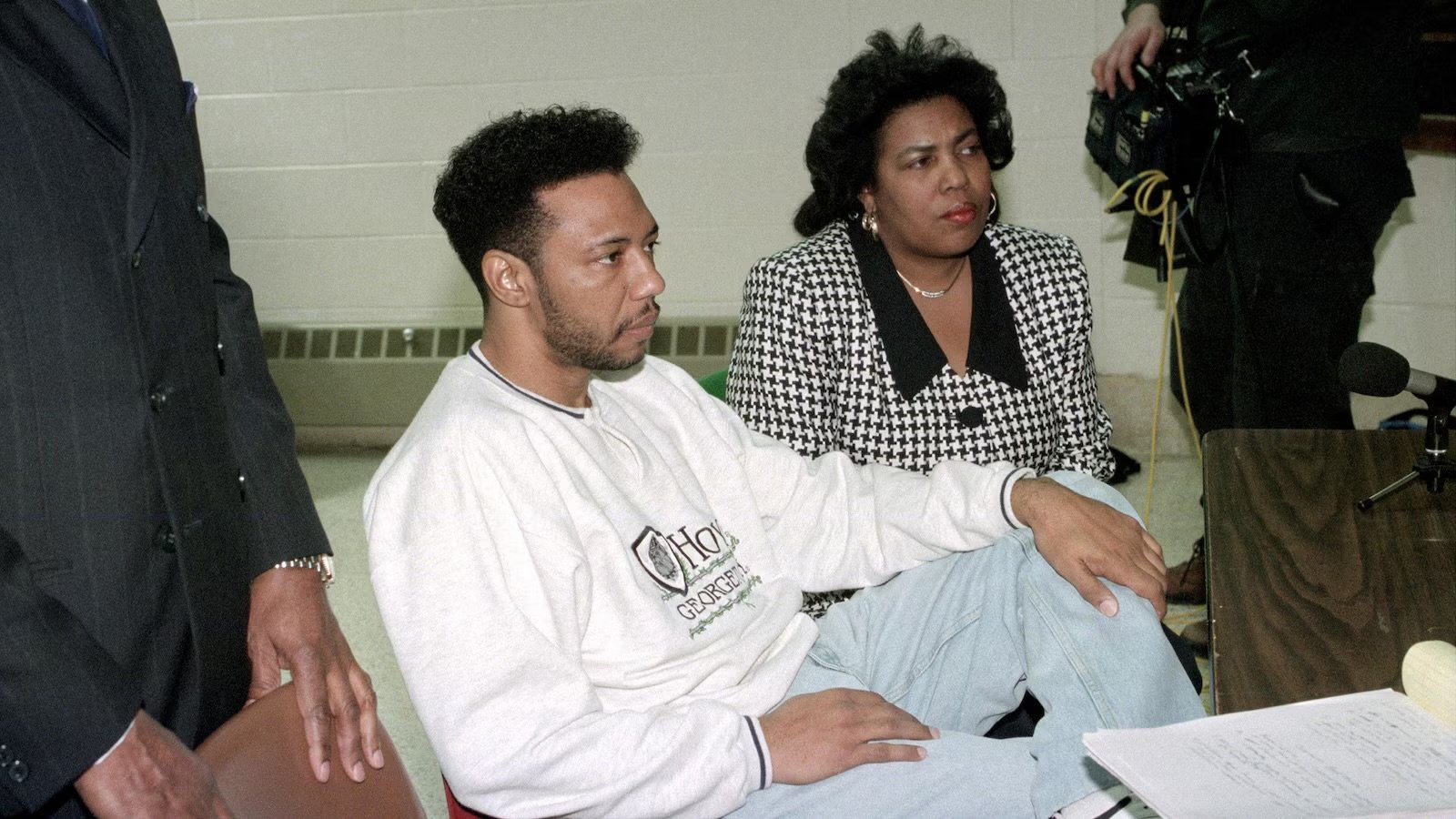
🏛️ Larry Hoover during earlier court proceedings tied to the Gangster Disciples case.
⚖️ Larry Hoover’s Future Now Sits With Illinois
The case reached a major turning point after President Donald Trump commuted Hoover’s federal life sentences in 2025.
That decision immediately reignited national conversation surrounding Hoover, prison reform, clemency, and whether someone once accused of leading one of America’s most feared street organizations should ever be released.
But an important detail remains:
Trump did not erase Hoover’s Illinois murder sentence.
That means Hoover still remains incarcerated because of the original state murder conviction tied to William “Pooky” Young.
Right now, Hoover’s future largely sits in the hands of Illinois Governor JB Pritzker and the Illinois Prisoner Review Board.
And politically, this situation is extremely sensitive.
Hoover is one of the most infamous gang figures in American history, while the Gangster Disciples still carry influence in Chicago and beyond. At the same time, Pritzker is widely viewed as a possible future presidential candidate, meaning any decision connected to Hoover could instantly become a national political issue overnight.
Meanwhile, Hoover’s supporters are presenting a very different image of him today.
His legal team argues Hoover is now elderly, suffers from major health complications, survived multiple heart attacks, spent decades in extreme isolation, and has already spent more than 50 years incarcerated. They also argue he no longer maintains ties to gang activity and should be allowed to spend the remainder of his life outside prison walls.
According to the Chicago Tribune, the Illinois Prisoner Review Board has already reviewed Hoover’s clemency request and submitted recommendations connected to his possible release to Governor Pritzker’s office.
Critics strongly disagree with the idea of release.
Cook County prosecutors and law enforcement officials continue arguing Hoover should never be released, claiming the damage tied to the Gangster Disciples devastated Chicago communities for generations. Cook County State’s Attorney Eileen O’Neill Burke previously argued Hoover “ravaged Chicago’s neighborhoods” through the organization’s growth and influence.
That divide is exactly why this case has become so politically and culturally explosive.
💥 Why This Case Matters Beyond Larry Hoover
This is no longer just a gang story.
It has become a national conversation about:
prison conditions,
solitary confinement,
redemption,
aging prisoners,
political clemency,
and whether someone tied to enormous criminal influence can ever truly change.
For younger generations, Larry Hoover’s name often became larger than the actual case itself because hip-hop transformed him into a cultural symbol.
But for many people throughout Chicago, the scars connected to the Gangster Disciples era remain deeply personal and very real.
That’s what makes this debate so complicated.
One side sees a 75-year-old man who has already spent more than 50 years behind bars.
The other sees a historic gang leader whose alleged influence contributed to violence and destruction long after his initial incarceration.
Now Illinois has to decide what happens next.
🕰️ What Happens Now
As of May 2026, Hoover remains incarcerated while awaiting a final decision regarding state clemency and parole possibilities.
The Illinois Prisoner Review Board has already submitted confidential recommendations connected to Hoover’s case to Governor Pritzker’s office, but there is currently no public deadline requiring Pritzker to make a final decision.
If Pritzker ultimately denies clemency, Hoover could realistically die in prison despite Trump’s federal commutation.
If clemency is granted, it would instantly become one of the most controversial prison-release decisions in modern American history.
Either way, the Larry Hoover story remains one of the clearest examples of how street power, politics, prison, hip-hop culture, and the American justice system can all collide into one case.
Not for clicks — for clarity.
— Elliott Carterr, LFTG Radio
📱 TikTok: @elliott_carterr ↗
📺 YouTube: @lftgradio ↗
🌐 Website: LFTGRadio.com ↗
⚖️ The Gutter Justice Project ↗
❤️ Support the work: LFTGRadio.com/donate ↗
