🕵🏾♂️ The Gutter Report: Questions Raised by the Record in the Khalif Sears Federal RICO Case
A Philadelphia SWAT raid, disputed warrant foundations, and credibility issues now under formal review
Philadelphia, Pennsylvania — Court filings, law-enforcement records, and post-conviction materials connected to Khalif Sears, identified in federal dockets in the Eastern District of Pennsylvania, raise unresolved questions regarding probable cause, warrant execution, use of force, and the reliability of cooperating witness narratives in a case stemming from the March 13, 2020 Bridge Street SWAT operation.
Based on documentation currently being reviewed, this report outlines what the public record reflects, identifies areas of dispute grounded in paperwork and transcripts, and confirms that the case is now under active review.
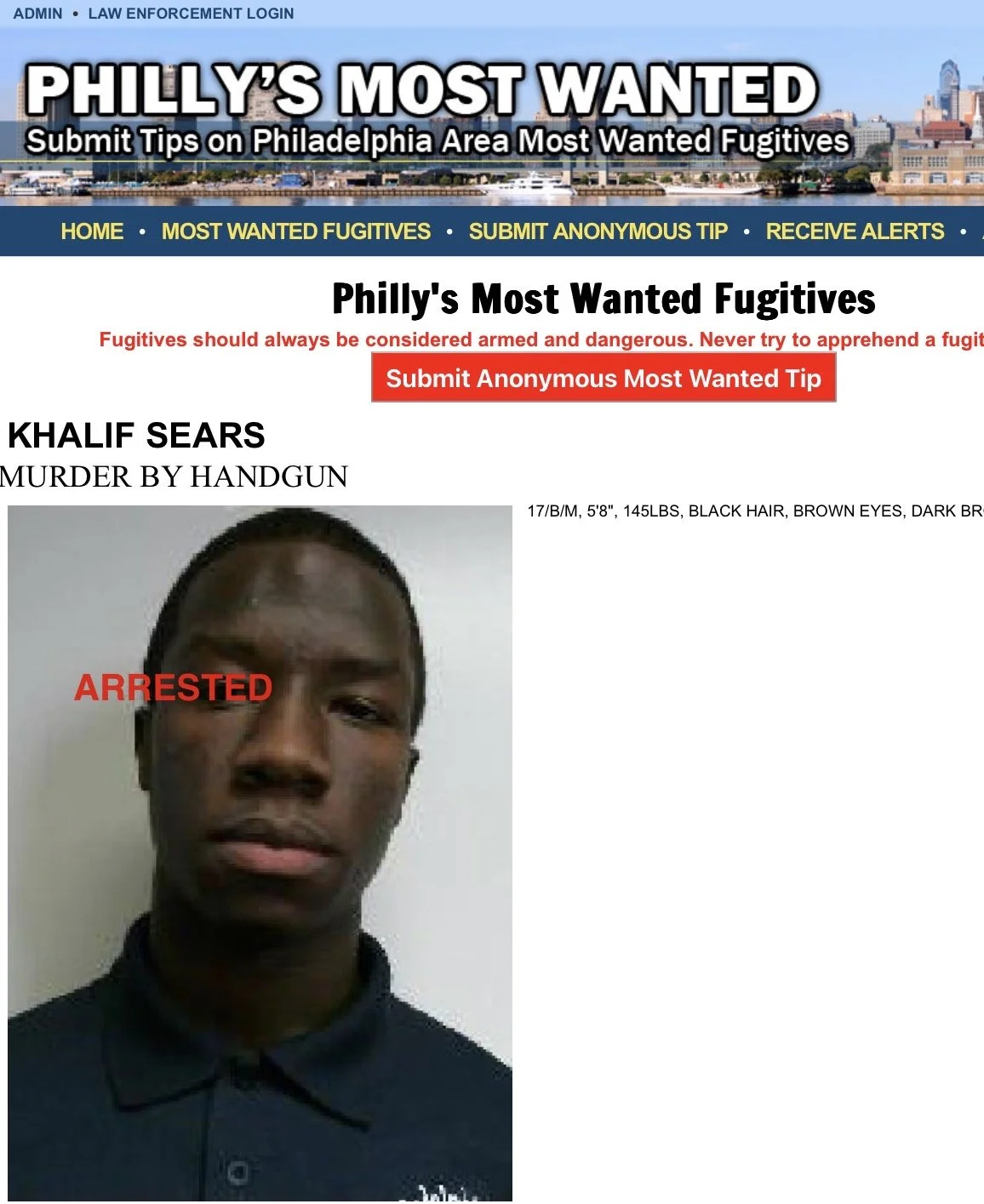
🧾 Archived “Most Wanted” listing reflecting the early framing of the investigation prior to arrest
🧾 What the Public Record Establishes
Federal court records and Department of Justice releases describe the Bridge Street operation as part of a broader investigation into a Northeast Philadelphia drug trafficking organization, referenced in filings as SG1700 / “1700 Scattergood.”
According to publicly available records:
On March 13, 2020, Philadelphia Police SWAT executed a warrant at a residence on Bridge Street.
During that operation, Philadelphia Police Sgt. James O’Connor IV was fatally shot.
Federal prosecutors later brought RICO conspiracy, drug trafficking, and firearm-related charges against multiple defendants.
Docket entries reflect that Khalif Sears entered a guilty plea in January 2025, with sentencing proceedings addressed in subsequent filings.
These baseline facts are established in the public record. What remains under scrutiny is how the case was constructed, adopted, and sustained across jurisdictions.
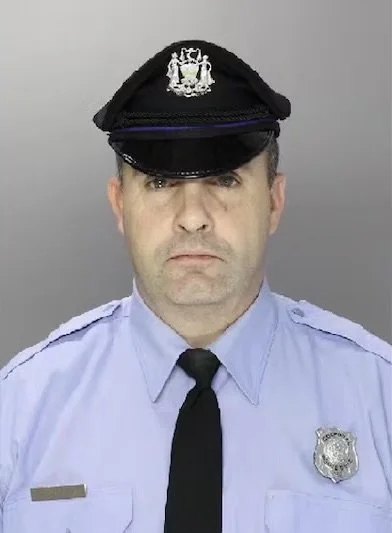
🕊️ Official portrait of Sgt. James O’Connor IV, whose death anchors the federal prosecution
📄 Arrest Warrant Foundations: Probable Cause Under Review
Materials tied to a separate 2019 homicide investigation—distinct from the officer-involved shooting—show law enforcement relied on:
surveillance footage depicting individuals walking toward and later away from an area following gunfire,
recovery of a jacket associated with one individual,
two firearms recovered without fingerprint or DNA attribution, and
witness accounts describing a single shooter.
Documentation now being reviewed includes arrest-warrant applications, affidavits of probable cause, and judicial notes, which reflect that at least one judge questioned whether the initial evidence presented met the threshold required for an arrest warrant.
The manner in which a warrant was later obtained—what information was added, changed, or omitted—remains a central issue of review grounded in paperwork, not narrative.
⏱️ Warrant Execution Timing and Scope
Search-warrant paperwork and police reports associated with Bridge Street indicate:
authorization for early-morning execution,
a scope focused on firearms and ammunition, and
reliance on information attributed to anonymous tips.
Records being examined raise questions about:
whether the warrant was executed outside the authorized time window,
whether surveillance corroborated the information used to secure the warrant, and
whether execution aligned with the warrant’s stated scope.
These questions turn on timestamps, logs, and returns, all of which are document-verifiable.
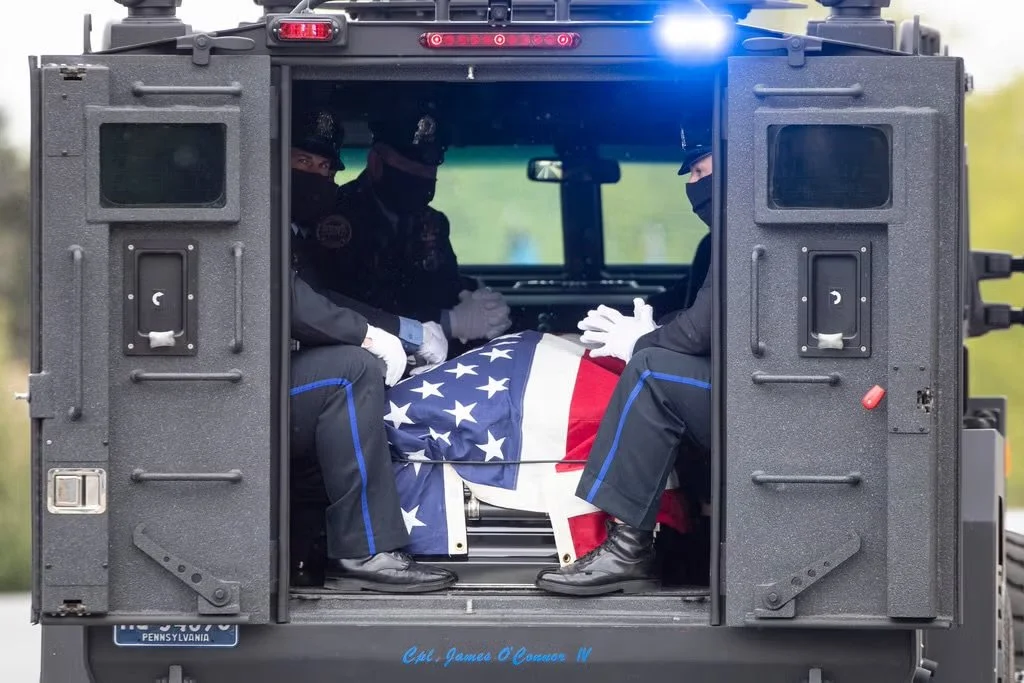
🚓 Law enforcement procession honoring Sgt. James O’Connor IV following his funeral service
🩸 Use-of-Force and Medical Documentation
Medical records, EMS logs, and use-of-force reports are under review concerning:
multiple gunshot wounds sustained during the raid,
handling of injured occupants following extraction, and
the timing between injury, medical response, and hospital transport.
These records are critical because they provide objective timelines that can be compared directly against police reporting and sworn testimony.
⚖️ State vs. Federal Case Posture
Transcripts from state preliminary proceedings are also part of the review. Available records reflect that responsibility for Sgt. O’Connor’s death was not assigned at that stage in state court, while federal authorities later adopted the case and pursued broader charges.
The procedural shift—what was adjudicated at the state level versus what formed the basis of federal prosecution—is a key focus of the ongoing review.
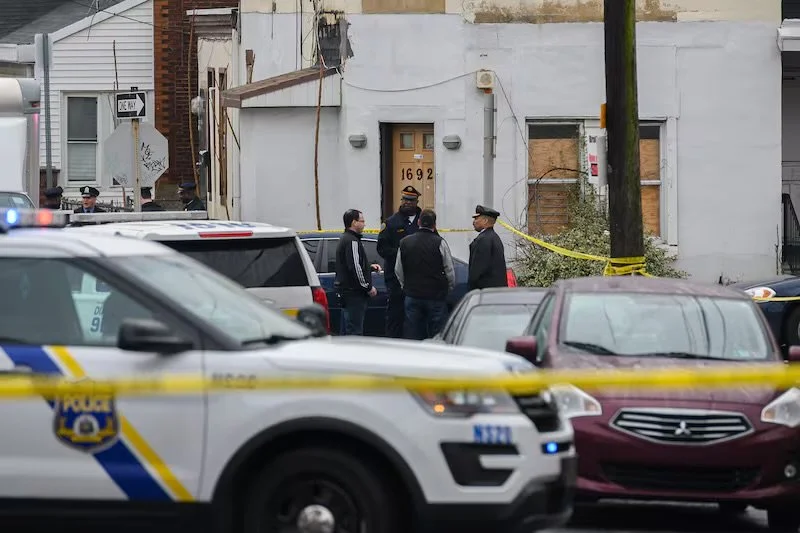
🏠 Exterior of the Bridge Street location where the SWAT warrant was executed
🧠 Cooperators, Proffers, and Summary-Based Evidence
Discovery materials reference multiple cooperating witnesses whose information was obtained through proffer sessions, documented primarily through agent-written summaries rather than recordings.
The review centers on:
consistency between proffer summaries and later sworn testimony,
disclosure of benefits or inducements, and
whether contradictions appear across statements, filings, and plea materials.
While the use of proffers is common in federal prosecutions, their reliability becomes critical when summaries materially influence charging theory.
📌 Status Update
Based on records already identified and additional documentation now being gathered, The Gutter Justice Project has formally opened a review of this case.
The scope includes:
arrest-warrant integrity,
warrant execution compliance,
use-of-force documentation, and
credibility consistency across cooperating witnesses.
No conclusions have been reached. Any findings will be driven strictly by verified records, transcripts, and documentation.
Not for clicks — for clarity.
— Elliott Carterr, LFTG Radio
📱 TikTok: @elliott_carterr ↗
📺 YouTube: @lftgradio ↗
🌐 Website: LFTGRadio.com ↗
⚖️ The Gutter Justice Project ↗
❤️ Support the work: LFTGRadio.com/donate ↗
