
🧾 The Gutter Report: Forty Years Without a Wound — Inside the Case of Quashar Neil
How a 22-Year-Old First-Time Offender Was Sentenced to 40 Years to Life Without a Single Injury
Syracuse, New York (Onondaga County) — At just 22 years old, Quashar Neil, a first-time offender, was sentenced to 40 years to life in New York State prison after being convicted of Attempted Murder in the First Degree of a police officer in connection with a high-speed police chase. No officer was shot. No civilian was harmed. No injuries were reported. Yet a life sentence was imposed.
This report marks the beginning of a documented review by The Gutter Justice Project in collaboration with LFTG Case Review, grounded in court records, filings, and contemporaneous reporting.

👤 Mugshot of Quashar Neil taken at the time of arrest.
🚔 What the State Alleged
According to prosecutors, the case arose from a high-speed pursuit in Syracuse during which officers alleged Neil was:
Driving a vehicle at speed
While simultaneously firing a gun backward at a pursuing police vehicle
Under New York law, Attempted Murder in the First Degree requires proof of specific intent to kill. Yet the publicly available record contains no eyewitness testimony from any officer or civilian who stated they saw Neil fire a weapon during the chase. No injuries resulted from the incident.
⚖️ Where the Evidence Gets Thin
The prosecution’s theory relied heavily on indirect testimony — statements based on what witnesses claimed they heard, rather than what they personally observed. That distinction matters, particularly when a conviction carries a life-altering sentence.
The “Friend” Who Did Not Testify
According to materials reviewed for this report, an individual described as a friend of Neil:
Had serious criminal exposure of his own, including a pending homicide case and a prior shooting involving a police officer
Allegedly implicated Neil based on what he said he heard
Did not testify at trial, meaning the jury never heard him examined or cross-examined about motive, credibility, or potential benefit
Despite his absence from the witness stand, his alleged statements still shaped the narrative presented to the jury.
📄 Judge and Defense at Arraignment
Tensions surrounding this case were evident from the very beginning. Local reporting documented a courtroom dispute between defense counsel and the presiding judge at Quashar Neil’s arraignment.
Source: CNY Central — “Judge rips into attorney at attempted cop killer’s arraignment”
That contemporaneous coverage describes:
A courtroom clash between the judge and defense
Arguments centered on the severity of the charges relative to the evidence
Public acknowledgment of disagreement over how the case was being framed at the outset
This documented exchange underscores how disputes over legal framing were present from arraignment, not raised for the first time after trial.
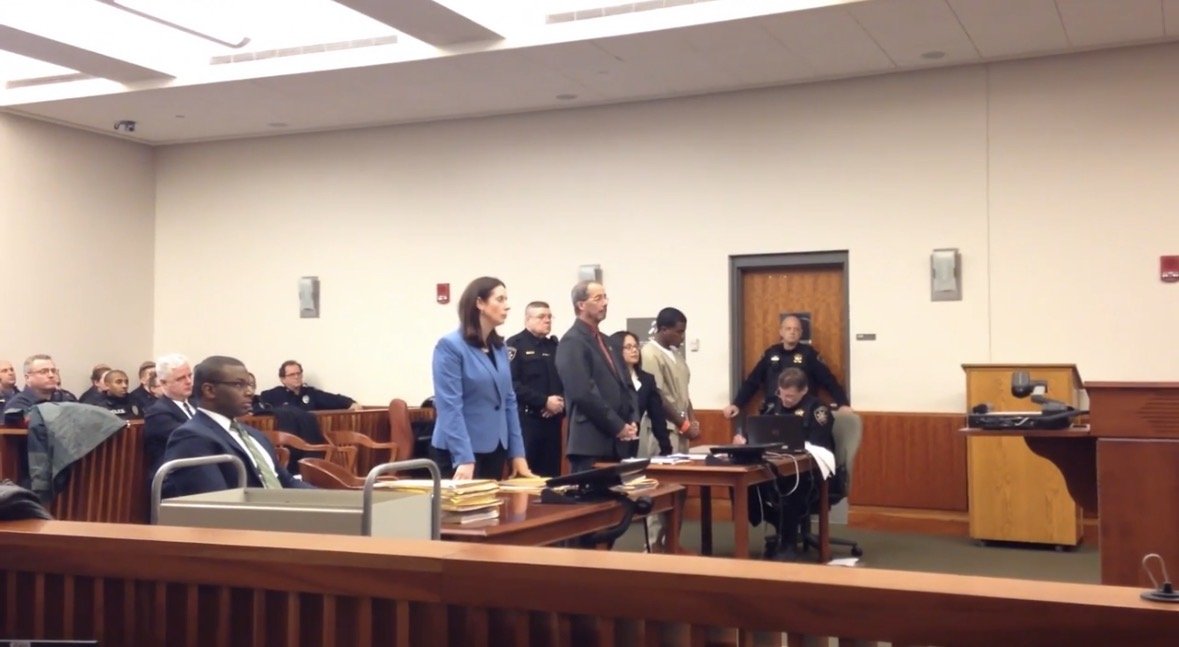
⚖️ Defense counsel and the court during Quashar Neil’s arraignment in Onondaga County.
🧑🏾🤝🧑🏾 The Witness Problem
One civilian witness became central to the prosecution’s case under circumstances that raise serious concerns.
Based on court filings and supporting documentation:
The witness initially refused to testify
Appeared in court in custody
Invoked her Fifth Amendment right
Was granted immunity
Invoked the Fifth again
Was held in contempt of court and jailed
Only after this sequence did she testify
Her testimony, according to the record, was not based on what she personally saw — but on what she claimed she heard.
How testimony is obtained matters, especially when it becomes a cornerstone of a case carrying a life sentence.
🧬 Forensic and Discovery Concerns
A review of the materials submitted for this report — including fingerprint response summaries, firearms comparison records, asset detail reports, police paperwork, and discovery correspondence — reveals significant gaps:
No conclusive forensic evidence definitively placing a firearm in Neil’s hands during the chase
Fragmented or disputed evidence chains
Repeated defense requests for additional discovery
Ongoing disputes over what was produced, when, and in what form
Taken together, the record suggests the case leaned far more on testimonial inference than on physical proof.
⛓️ Sentence Severity
Despite:
No injuries
No deaths
No eyewitness testimony of the shooting
No definitive forensic placement of a weapon
Quashar Neil was sentenced to 40 years to life.
The only reported plea offer was 25 years to life.
That disparity between alleged conduct and punishment is a central reason this case is now under review.
🧩 A Broader Pattern in Onondaga County
This case does not stand alone.
Across multiple unrelated cases originating in Onondaga County, recurring themes have emerged:
Heavy reliance on indirect or incentivized testimony
Discovery disputes that persist throughout proceedings
Extreme sentencing outcomes relative to documented harm
These persistent features make Onondaga County a place of interest for accountability reporting.
🔎 Comparison to The Syracuse Setup
In our previously published Gutter Report series titled The Syracuse Setup — Inside the Case (Part III), we examined the prosecution of Nahkeen Lewis-Bush, another Onondaga County case marked by unresolved evidentiary questions and contested testimony. The reporting identified:
Questions about what evidence was actually presented vs. what was assumed
A conviction and sentencing outcome that prompted scrutiny relative to the underlying record
In both matters — Lewis-Bush and now Neil — the central question remains the same: does the evidentiary foundation support the severity of the outcome?
🏛️ Fitzpatrick and Institutional Accountability
The Onondaga County District Attorney’s Office, led for decades by William J. Fitzpatrick, is the prosecutorial authority behind these cases. When multiple prosecutions from the same county are built on similar structures — indirect testimony, contested discovery, and severe sentences — it becomes appropriate for public reporting to examine those patterns through a process-focused lens.
This is scrutiny of procedure and pattern, not speculation about motive.
📌 What Comes Next
This case is now part of the active docket of:
The Gutter Justice Project in collaboration with LFTG Case Review
Next steps include:
Constructing a detailed timeline from arrest through sentencing
Identifying the exact witness sequences and jury instructions
Evaluating discovery compliance
Outlining potential appellate or post-conviction avenues
Publishing Part II focused on how these patterns have manifested in Onondaga County prosecutions
Not for clicks — for clarity.
— Elliott Carterr, LFTG Radio
📱 TikTok: @elliott_carterr
📺 YouTube: @lftgradio
🌐 Website: LFTGRadio.com
