How unresolved contradictions, missing evidence, and an unidentified suspect shaped the conviction of Jabre Davis
🚨 The Case Did Not Begin as a Homicide
Onondaga County, New York — On May 25, 2009 — Memorial Day in Syracuse — a shooting on West Matson Avenue pulled Jabre Davis (10-B-1064) into the criminal legal system.
At the time of his arrest, the victim — publicly identified as James Ellis, 28 — was still alive. Syracuse Police charged Davis with attempted murder in the second degree, not homicide, and stated publicly that it would be up to the Onondaga County District Attorney’s Office to decide whether to upgrade the charges if the victim later passed away.
The victim later died.
The charge was upgraded under District Attorney William Fitzpatrick — and the case hardened into a life-sentence prosecution even as key contradictions about shooter identity remained unresolved.
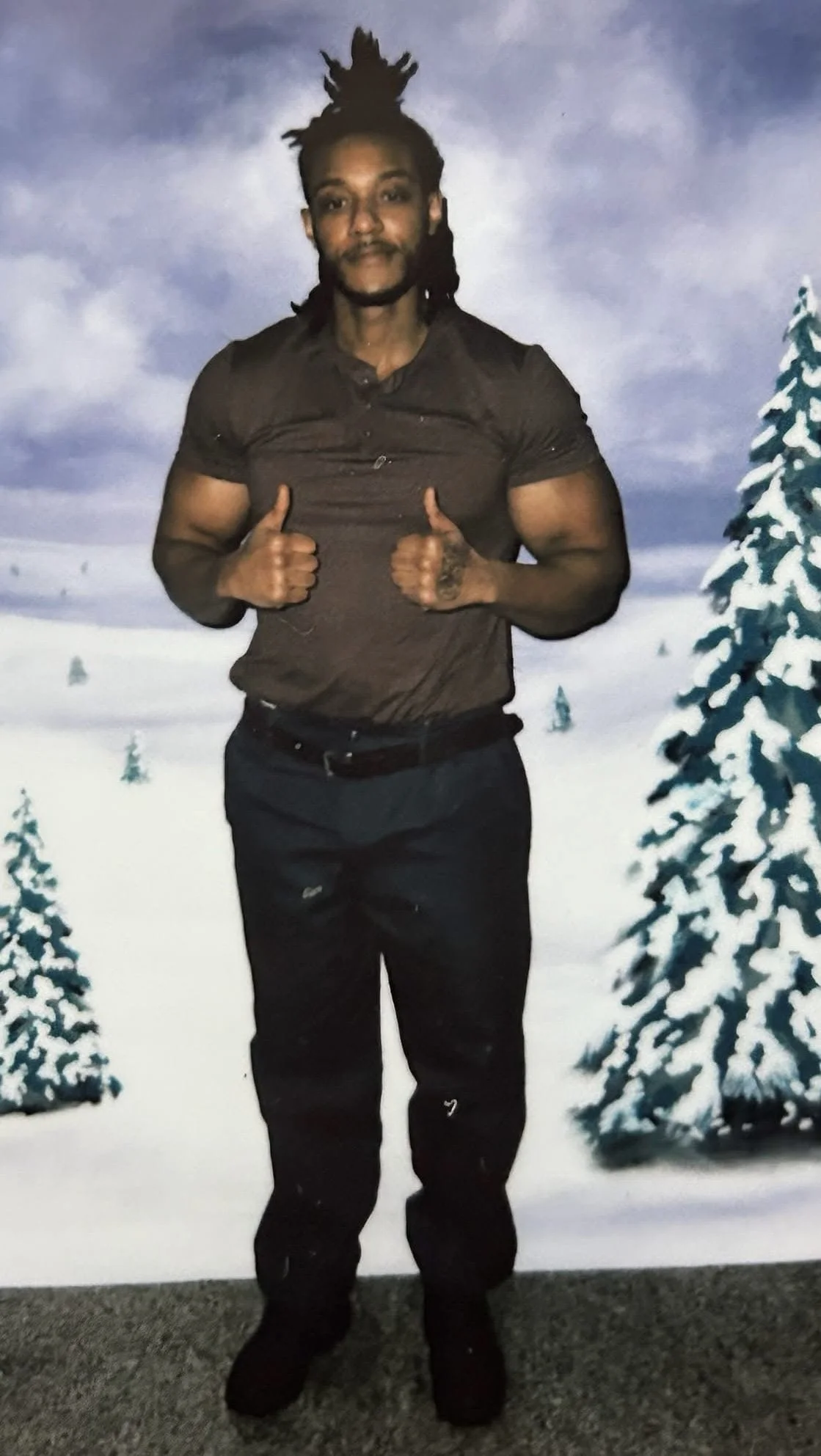
👍🏾 Jabre pictured in good spirits during his incarceration.
👥 Who Was There That Night
Names matter.
Based on the narrative provided by Jabre Davis and the names referenced in the materials, individuals tied to the events surrounding the incident include:
Jabre Davis
Quantae Albert
Joshua Harris
Timothy Benjamin
Jamel Gressett (victim’s friend)
James Ellis (the victim)
Nehemiah Ellis (victim’s sister)
The group was captured on store surveillance footage shortly before the shooting. A confrontation followed. Gunshots rang out. People ran.
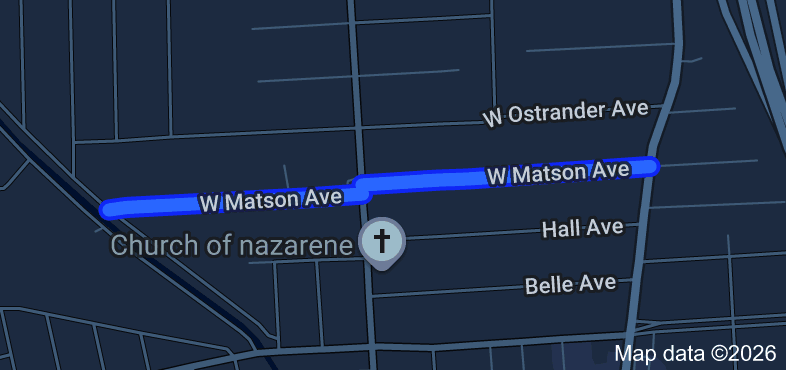
📍 West Matson Avenue, Syracuse — location of the shooting
👕 The Clothing Mismatch the Court Acknowledged
This contradiction sits at the center of the case.
Two eyewitnesses testified that the shooter wore a white shirt with airbrushing on both the front and the back.
But surveillance footage described in the appellate record shows Jabre Davis wearing a shirt with airbrushing on the front only.
More critically, the record acknowledges that another man at the scene was wearing a white shirt with airbrushing on both the front and the back — and that individual was never identified or apprehended.
In a case built on identification, that discrepancy was never resolved.
🔬 No Gun, No GSR, No DNA
After his arrest, Jabre Davis states he requested gunshot residue (GSR) testing.
He says it was denied.
According to Davis, discovery later reflected:
No GSR evidence
No DNA tying him to a firearm
No recovered weapon despite searches of the house and surrounding area
The prosecution’s position was not that forensic evidence existed — but that Davis had time to hide the gun.
The case proceeded without physical proof.
📞 The 911 Description Problem
The initial 911 caller described the fleeing shooter as:
A Black male
Wearing all black
Running from the scene
Holding a black object
That description does not neatly align with the unresolved clothing conflict already acknowledged in the record — particularly given the presence of another unidentified individual whose attire more closely matched the shooter’s description.
🧑🏾⚖️ What the Jury Never Heard About the Victim’s Mother
The victim’s mother was present at the scene that night. However:
Her name does not appear in public court records
She did not testify at trial
She did not provide a direct sworn affidavit
What does exist is a notarized affidavit dated January 8, 2015, from Dorothy Shabazz.
In that affidavit, Shabazz recounts an unplanned conversation in which the victim’s mother allegedly stated that Jabre Davis did not shoot her son.
This account is hearsay, not direct testimony — but it is documented, notarized, and was never presented to the jury or tested in court.
📝 Jamel Gressett’s Statement
Jamel Gressett, the victim’s friend who was present that night, later provided a statement acknowledging that Jabre Davis did not kill his friend.
Gressett also described the shooter as wearing a shirt with:
Writing
Tombstones
Multiple colors on the back
That description again points away from Davis and toward the same unidentified individual acknowledged in the record.
⚖️ The Lawyer and the Plea Offer Claim
Jabre Davis was represented at trial by Michael Spano.
Davis alleges that:
A plea offer was extended to his attorney
The offer was never communicated to him
Whether he would have accepted the offer is legally irrelevant. Failure to convey a plea offer is a recognized issue if substantiated.
Davis also raises concerns about missing subpoenas and uncalled witnesses, including Antonia Cherry.
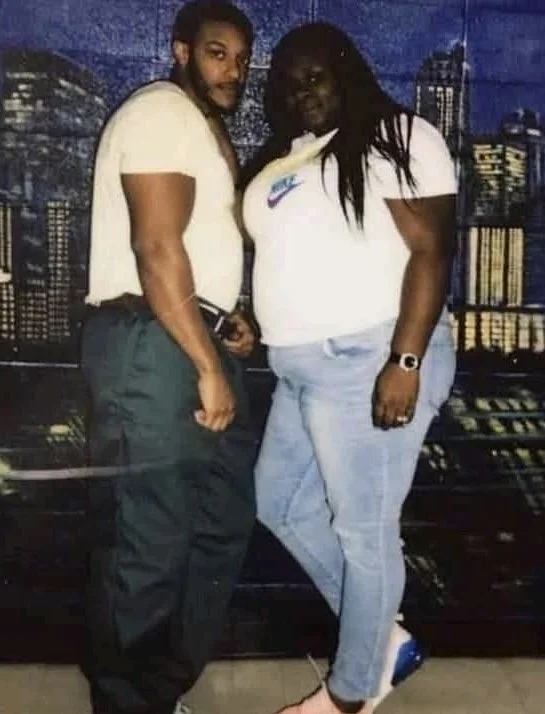
📸 Jabre with his wife during visitation
🧩 A Familiar Pattern in Fitzpatrick-Era Attempted Murder Prosecutions
Jabre Davis’s case reflects a broader prosecutorial pattern seen in Onondaga County under District Attorney William Fitzpatrick.
Across multiple cases involving Black defendants, attempted murder charges have been pursued aggressively — often resulting in extreme sentences — even where:
No one was seriously injured
No weapon was recovered
No DNA tied the accused to the shooting
This pattern has surfaced repeatedly in Onondaga County cases, including The Syracuse Setup – Inside the Case (Part III) and Forty Years Without a Wound (Part II), where severe attempted murder outcomes were driven by narrative certainty rather than forensic proof.
In each instance, evidentiary gaps were reframed as credibility issues, and once a theory solidified, contradictions were no longer treated as reasons to slow the case down.
Jabre Davis’s prosecution fits squarely within that same framework.
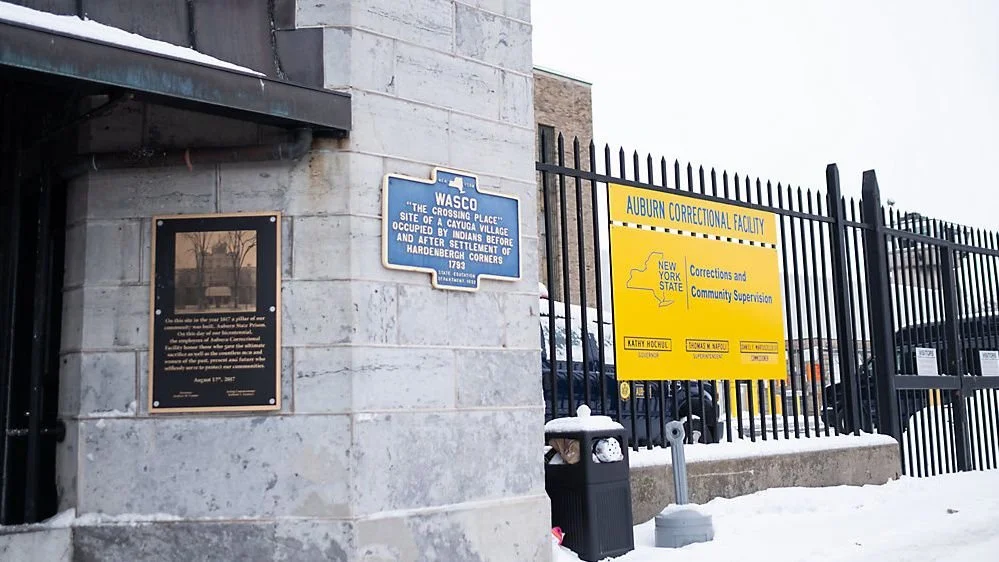
📸 Auburn Correctional Facility, where Jabre Davis is currently incarcerated
⏳ Where Things Stand Now
Jabre Davis has spent more than 16 years incarcerated on a 25-years-to-life sentence.
His direct appeal, supplemental brief, and CPL §440 motion have been exhausted.
What remains are unresolved questions:
Who was the unidentified man matching the shooter’s described clothing?
Why was GSR testing denied after being requested?
Why did the absence of a weapon and DNA not halt the prosecution?
Why were potentially exculpatory witnesses never heard by the jury?
These are not emotional questions.
They are record-based ones.
Not for clicks — for clarity.
— Elliott Carterr, LFTG Radio
📱 TikTok: @elliott_carterr ↗
📺 YouTube: @lftgradio ↗
🌐 Website: LFTGRadio.com ↗
⚖️ The Gutter Justice Project ↗
❤️ Support the work: LFTGRadio.com/donate ↗
