
🎤 The Gutter Report: We Graded Chey as an Artist — And Method Man’s Shadow May Be Her Biggest Problem
After reviewing Chey’s catalog, freestyles, collaborations, performances, interviews and career trajectory, The Gutter Report graded Method Man’s daughter across seven categories — from bars and flow to originality and career execution
⚠️ First, Full Disclosure
Staten Island, New York - There is existing public tension between LFTG Radio founder Elliott Carterr and Chey, as well as her father, Method Man.
That makes transparency necessary.
This review is not presented as an objective scientific measurement of talent. Music criticism is inherently subjective, and readers should know the relationship surrounding the commentary.
But the personal situation also doesn’t make Chey’s music immune from criticism.
For this review, The Gutter Report went beyond one viral clip or one bad record. We examined Chey’s publicly documented releases, freestyles, collaborations, performances, interviews and career development.
Where she deserves credit, she’ll get it.
Where the music falls short, we’ll explain why.
And most importantly, Chey will not be graded against Method Man.
She’ll be graded as Chey.
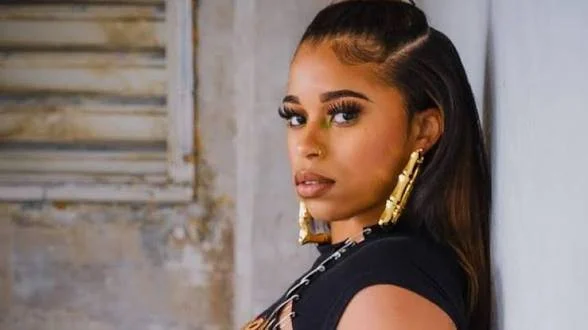
📸 Chey, the Staten Island rapper whose growing catalog and artistic identity are examined in The Gutter Report’s full career review.
🎧 So Who Is Chey Without Method Man?
Cheyenne Smith, professionally known as Chey, entered hip-hop carrying an advantage and a burden simultaneously.
Her father is one of the most recognizable rappers ever produced by New York.
Method Man isn’t merely a successful rapper. He’s a Wu-Tang Clan member whose voice, charisma, cadence and personality became instantly recognizable across generations of hip-hop.
But Chey didn’t choose her father.
So holding her to Method Man’s standard would be ridiculous.
The question is different:
If Method Man’s name disappeared from the conversation, would Chey’s music make people care about Chey?
After reviewing the career, that’s where the problems begin.
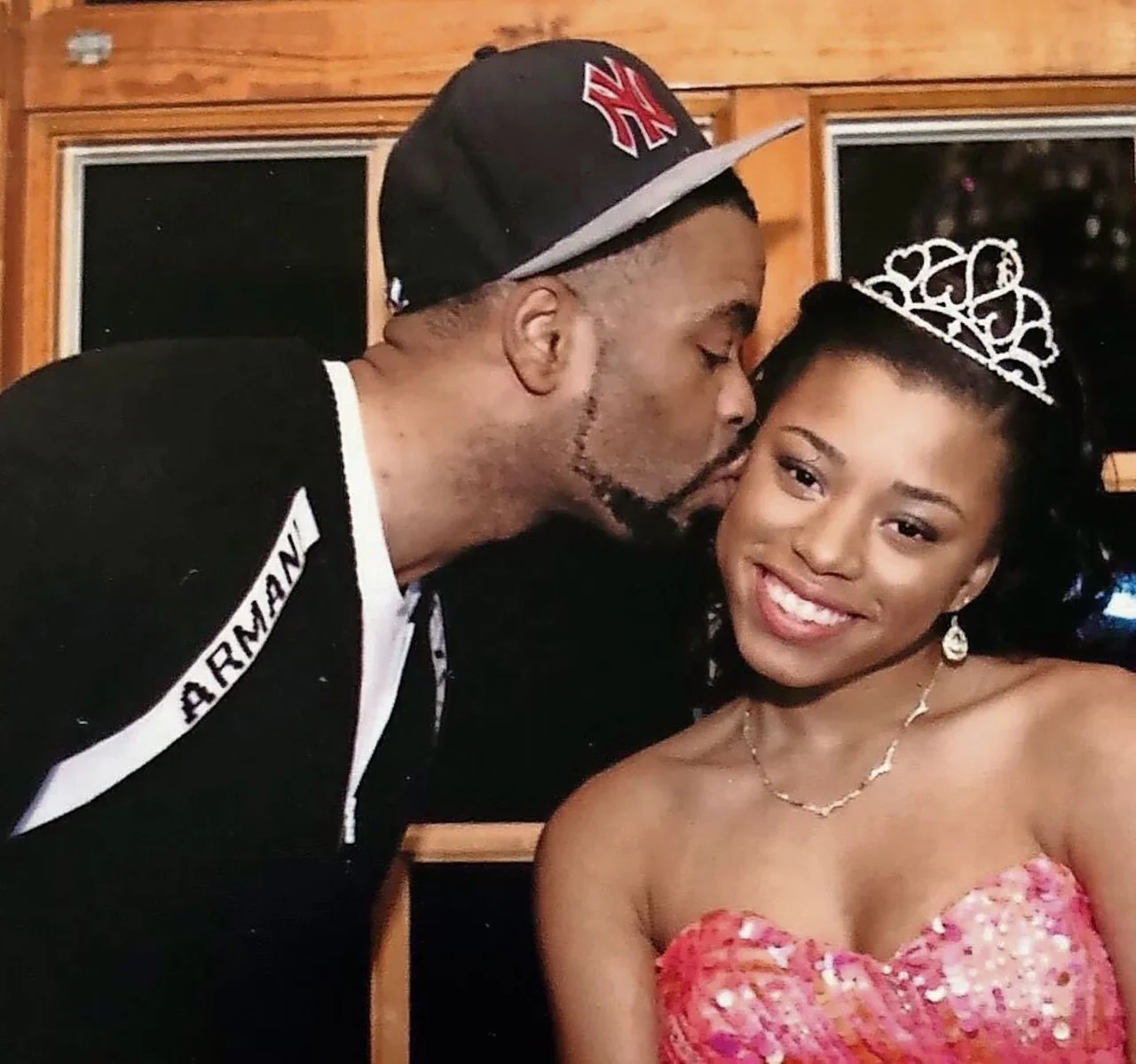
👑 Chey pictured with her father, Wu-Tang Clan legend Method Man — a hip-hop legacy she is attempting to build beyond.
📀 This Isn’t Her First Year Rapping
Chey’s recording history reaches back to at least 2021, when she appeared on a remix of 2nd Generation Wu’s “Tag I’m Litt.”
Her concentrated solo push began in early 2024 with the drill-influenced “Hair and Nails,” followed by “Boujee and Ghetto.” Her catalog has since expanded through additional solo releases, remixes and collaborations.
That distinction matters.
Chey shouldn’t be evaluated like someone who started rapping six months ago.
She’s had time to develop.
She’s also had legitimate opportunities.
In March 2024, Trina brought Chey onstage during a Detroit concert, providing a significant public co-sign from an established female rap veteran. Chey subsequently appeared on Sway in the Morning, where she freestyled over Redman’s “Da Goodness.”
Method Man has publicly supported her career as well, including bringing her onstage during a New York performance.
And Chey has found herself around other major figures in New York hip-hop media, including Funk Flex.
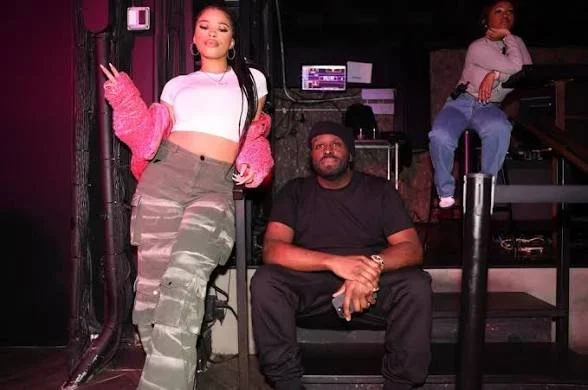
🎤 Chey pictured with legendary New York DJ Funk Flex, another major hip-hop platform reached during her developing career.
So there is enough work — and enough opportunity — to begin asking serious questions about the artist she has become.
Let’s grade it.
✍🏾 BARS / PEN —
5/10
Calling Chey completely incapable of rapping would be unfair.
Her Sway freestyle is probably the strongest argument against that criticism.
She demonstrated an ability to construct punchlines, rhyme coherently and deliver an actual verse in an environment where there wasn’t much room to hide. Hip-hop outlets subsequently highlighted portions of that performance.
But being capable of writing bars and possessing an exceptional pen are very different things.
Across her work, the writing frequently relies on familiar flexes, lifestyle references, sexuality, appearance and relatively straightforward punchline construction.
There aren’t enough moments where the writing itself becomes the attraction.
The great pens make you rewind.
A double meaning hits.
An unexpected metaphor lands.
A rhyme structure develops somewhere you didn’t expect.
A story paints a picture.
With Chey, those moments are too infrequent.
The pen is functional. It isn’t formidable.
Score: 5/10
🥁 FLOW —
4/10
This is where the criticism becomes stronger.
Chey can rap on beat.
But staying on beat isn’t the same thing as possessing an interesting flow.
Strong MCs manipulate pockets. They accelerate, slow down, stretch syllables, interrupt patterns, change emphasis and sometimes make the beat sound different simply because of how they’re attacking it.
Chey’s cadences too frequently become predictable.
There are flashes where she finds a comfortable pocket, but there aren’t enough meaningful switches or rhythmic surprises to create a recognizable Chey flow.
And that’s important.
You should eventually be able to hear an artist for ten seconds without seeing the screen and know exactly who you’re listening to.
Chey isn’t there.
Score: 4/10
🎙️ DELIVERY —
3.5/10
This may be the biggest technical weakness.
Because sometimes the difference between an average bar and a memorable bar isn’t actually the writing.
It’s the person saying it.
Chey has confidence. Her Sway appearance demonstrates that she isn’t terrified of a microphone or incapable of performing under pressure.
But confidence and command aren’t synonymous.
Her delivery can feel flat, and there isn’t enough variation in vocal texture, aggression, humor, emphasis or emotion to elevate otherwise ordinary writing.
That’s particularly damaging when the bars themselves aren’t exceptional.
A phenomenal delivery can rescue average writing.
Average delivery exposes it.
Score: 3.5/10
🌟 VOICE & PRESENCE —
4/10
Here’s where one criticism needs to be corrected.
Saying Chey literally has “no personality” isn’t accurate.
Watch her interviews and there’s clearly a personality there. She talks, jokes, expresses herself and appears comfortable discussing her life and ambitions.
The real problem is more interesting:
Where does that personality go when the beat starts?
The personality visible during interviews doesn’t consistently explode through the records.
Some artists aren’t incredible technical rappers but become stars because they’re impossible to ignore.
Their humor, aggression, weirdness, vulnerability, arrogance, sexuality or sheer charisma becomes the product.
Chey hasn’t established that kind of presence yet.
She has an identifiable biography.
She doesn’t yet have an equally identifiable musical personality.
Score: 4/10
🎶 SONGMAKING / HOOKS —
3.5/10
Freestyling and making records are separate disciplines.
You can be able to rap and still not know how to make a great song.
And this is another area where Chey’s catalog struggles.
There are attempts at repetition, catchphrases, contemporary structures and accessible hooks, but she has yet to produce the record that makes everything click.
Where is the Chey song?
The record where someone who doesn’t know Method Man, doesn’t care about Wu-Tang and doesn’t follow New York rap hears it and immediately wants to know who made it?
Several years into the journey, that record remains difficult to identify.
And without exceptional bars, songmaking becomes even more important.
If you aren’t going to lyrically overwhelm the audience, you’ve got to make them sing something.
Score: 3.5/10
🧬 ORIGINALITY / ARTISTIC IDENTITY —
3/10
This is the central problem.
And ironically, it’s something Chey herself appears aware of.
She has repeatedly emphasized that she doesn’t want Method Man simply making phone calls and handing her a career.
Chey has described working at Wendy’s as a teenager despite having a famous father, and accounts of her upbringing describe Method Man and his wife emphasizing work and education. Chey later graduated from Wagner College with a psychology degree.
That deserves acknowledgment.
This isn’t an argument that Chey has never worked for anything.
Work ethic and artistic identity are two completely different questions.
What is the Chey universe?
What subject belongs specifically to her?
What sound?
What aesthetic?
What perspective?
What personality?
Even coverage intended to introduce Chey as an independent artist repeatedly circles back to Method Man, Wu-Tang, her hip-hop lineage and the challenge of creating her own lane.
That’s partly inevitable.
But eventually the music has to overpower the genealogy.
Her marijuana imagery also exists inside a cultural universe already enormously associated with Method Man, Redman and How High.
There’s nothing wrong with smoking weed.
There’s nothing wrong with making it part of your image.
But when your father is Method Man, leaning heavily into that aesthetic creates another problem.
Instead of separating Chey from the world audiences already associate with her father, it can pull her deeper inside it.
At its worst, the presentation can begin feeling less like the creation of a new character and more like somebody auditioning for a reboot of How High.
That’s a punchline.
But underneath the joke is a legitimate artistic criticism:
Chey inherited an incredibly distinctive cultural universe without yet building an equally distinctive universe of her own.
Score: 3/10
📈 CAREER EXECUTION —
5/10
This is where she deserves credit.
Chey is actually working.
She’s releasing music.
She’s shooting visuals.
She’s performing.
She’s doing interviews.
She’s collaborating.
She got the Trina co-sign.
She went to Sway.
She has appeared alongside prominent figures such as Funk Flex.
And she has continued pursuing the career instead of releasing two songs, getting some headlines because of her father and disappearing.
Chey has also publicly rejected the idea that Method Man should simply make a call and put her on, maintaining that she wants to earn her opportunities herself.
Fair enough.
But there’s another side to career execution.
What have those opportunities converted into?
Being Method Man’s daughter doesn’t automatically make someone talented.
It also doesn’t mean Method Man personally arranged every opportunity.
But pretending the name has no value would be equally ridiculous.
A random emerging Staten Island rapper releasing “Hair and Nails” doesn’t automatically become national hip-hop news.
Method Man’s daughter releasing “Hair and Nails” does.
That’s not an insult.
That’s celebrity economics.
The question is what happens after people click.
Years into Chey’s recording career, the defining breakout moment — the song or performance that forces audiences to stop qualifying her name with her father’s — still hasn’t arrived.
Score: 5/10
📊 THE GUTTER REPORT ARTIST REPORT CARD
Bars / Pen: 5/10
Flow: 4/10
Delivery: 3.5/10
Voice & Presence: 4/10
Songmaking / Hooks: 3.5/10
Originality / Artistic Identity: 3/10
Career Execution: 5/10
TOTAL: 28/70
FINAL SCORE: 4.0/10
🧠 The Nepotism Conversation Is Asking The Wrong Question
Did Method Man personally manufacture Chey’s entire career?
There’s no evidence to support saying that.
In fact, Chey has publicly described an approach in which her father supports her but expects her to work.
So we’re not going to manufacture a nepotism allegation simply because it’s convenient.
There’s a much better question.
Would an unknown Staten Island rapper with these exact same records have received these exact same opportunities and this amount of national coverage?
That’s impossible to prove either way.
But it’s worth asking.
Because one piece of information continues to dominate introductions to her career:
She’s Method Man’s daughter.
And eventually, if Chey wants the independent artistic identity she says she’s pursuing, that has to become the least interesting thing about her.
Not the most interesting.
⚖️ The Final Verdict
Chey isn’t talentless.
She isn’t incapable of rapping.
And pretending she has accomplished absolutely nothing would make this review less credible, not more.
The Sway freestyle showed flashes.
The Trina co-sign was real.
The persistence is real.
The work ethic appears real.
But none of those things answer the most important question.
Why Chey?
Why should somebody choose her record over thousands of other rappers fighting for the same listener?
Right now, the pen isn’t exceptional enough to be the answer.
The flow isn’t distinctive enough.
The delivery isn’t commanding enough.
The hooks aren’t undeniable enough.
And the personality visible outside the booth hasn’t translated strongly enough inside it.
That leaves identity.
And that’s precisely where Chey has the most work to do.
Being Method Man’s daughter isn’t Chey’s biggest problem.
Method Man’s success didn’t make her music bad.
His legacy isn’t responsible for her cadence.
His career isn’t responsible for her songwriting.
But after years of trying to establish herself independently, the fact that “Method Man’s daughter” remains the most immediately compelling part of Chey’s artistic story is a problem only Chey can solve.
The solution isn’t running farther away from her father’s legacy.
It’s becoming interesting enough that nobody needs to mention it.
The Gutter Report Artist Score: 4.0/10
Not for clicks — for clarity.
— Elliott Carterr, LFTG Radio
📱 TikTok: @elliott_carterr ↗
📸 Instagram: @thegutterreport ↗
📺 YouTube: @lftgradio ↗
🌐 Website: LFTGRadio.com ↗
⚖️ The Gutter Justice Project ↗
❤️ Support the work: LFTGRadio.com/donate ↗
